Journal
How to choose a clinic in Seoul without reading a hundred reviews
A short filter for credentials, operating style and communication, plus the one page brief that makes every Seoul consultation easier to compare.
 Emily Westbrook
A hundred reviews will not pick a clinic for you. A short filter will. Reviews are written by people with different faces, different goals and different standards, and many are edited, selected or paid for. You can read for weeks and know less than when you started.
Use three questions instead: who is qualified, who operates and how, and how well does the clinic communicate. Each can be checked in a few emails. Then bring the same one page brief to every clinic and compare answers, not adverts.
This guide is about the process of choosing. It does not rank clinics, and it cannot replace a surgeon’s own advice about you.
1. Check credentials
Credentials answer a plain question: is this person trained to do this procedure?
Ask each clinic for the following, in writing:
- The name of the surgeon who would operate on you.
- Their specialty training, for example a specialist in plastic surgery, and how to verify it.
- The clinic’s licence and whether it is a registered medical facility.
- Whether the operation takes place in the same building as the consultation, and what safety equipment is there.
Verification matters more than a certificate on a wall. A reputable clinic will tell you where to check. If they cannot or will not explain how, move on. Official sources in Korea and your own country’s medical bodies can help you confirm what you are told, and a local doctor at home can often advise on how.
Pay attention to the answer about who operates. Ask directly: “Will the surgeon I meet today perform the whole operation?” The answer should be clear and specific. A vague answer is a reason to stop and ask again.
2. Check operating style
Operating style is the surgeon’s habit: what they change, how much, and what they leave alone.
Two surgeons can look at the same face and propose different plans. One may favour a bold change, another a gentle one. Neither is wrong in general. One of them is wrong for you if it does not match what you want.
Look for these signs of a plan that fits you:
- The surgeon talks about your face, not a template.
- They explain what they would not change, and why.
- They show results on faces with a structure similar to yours, and they say when a result was unusual.
- They name a limit. “That change would not suit your proportions” is a good sign.
Be careful with a plan that looks the same for everyone. Also be careful with one that promises a result without conditions. No honest clinician promises a specific outcome.
Ask what the options are and which one they recommend, so you can compare their reasoning with another clinic’s.
3. Check communication
Communication is how the clinic behaves before you commit. It is a fair preview of how they will behave afterward.
Watch for four things:
- Speed and clarity. Do they answer your questions, or send a generic reply?
- Language. Can you discuss risks and options in a language you understand fully, with a qualified interpreter when needed?
- Pressure. Are you given time to think, or are you pushed to book now?
- Aftercare. Who do you speak to if something worries you after you go home, and how quickly?
Pressure is the most revealing. A good consultation can end with “go away and think about it”. If a clinic makes you feel rushed, that is information. You can walk away from any consultation, and you should give yourself time between the consultation and any decision.
Ask about follow up at home too. A plan that works only if you stay in Korea for a long time is a different plan from one that includes a clear way to check in after you return.
4. Write your brief
A clinic can only answer the question you ask. A one page brief makes every consultation comparable.
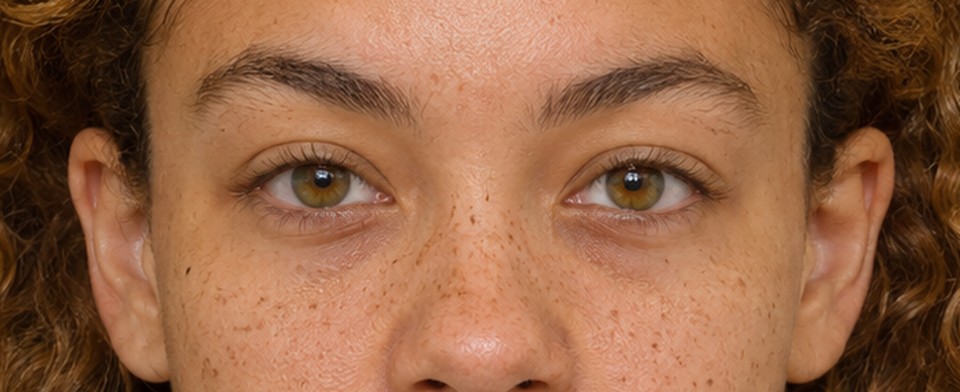
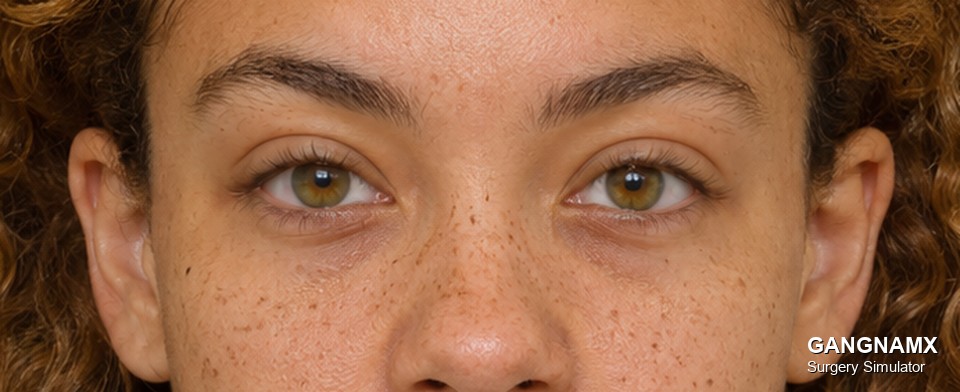
Our model shows what a good brief looks like. She has almond hazel eyes and a heart shaped face. Say her one question is: “Would a soft upper lid crease suit my eyes?” That is specific and answerable.
Pair the question with a picture. A simulation of one small change on her own front photo gives the surgeon something concrete to respond to.
In the simulation a clear, natural crease appears on both eyes and the lids sit a little more open, while the iris and eye shape stay the same.
Your brief should fit on one page and hold five items:
- Two or three photos: front, true 90 degree side, three quarter view.
- One or two simulated images of the change you are curious about.
- The one feature that bothers you, in one plain sentence.
- What you want to keep. For example: “I want to keep my own face shape.”
- Your questions about risk, healing and follow up.
Send the same brief to every clinic. Then the differences in their replies are the real data.
5. Compare in one table
After each consultation, fill in the same table. Do it the same day, while you remember.
| Question | Clinic A | Clinic B | Clinic C |
|---|---|---|---|
| Surgeon named and verified? | |||
| Does the surgeon do the whole operation? | |||
| Did they explain what they would not change? | |||
| Did they show results like my face? | |||
| Was I given time to decide? | |||
| Who answers questions after I go home? |
Skip the price column at first. Cost matters, but it is easier to compare once you know the plans are similar, and prices vary by clinic and by what the quote includes. Ask what the quote covers and what it leaves out.
A pattern usually appears. One clinic answers more questions, explains more, and pressures less. That clinic has earned your next conversation, not your deposit.
Before you decide
- Do: ask for the operating surgeon’s name and how to verify their training.
- Do: send the same one page brief to every clinic.
- Do: give yourself a cooling off period after each consultation.
- Don’t: choose from review scores or before and after photos alone.
- Don’t: accept a plan that looks the same for every client.
- Ask: what would you not change on my face, and why?
Simulation images by GangnamX.
 Plastic Surgery SimulatorKnow before you go.Simulate my face