Journal
Why Korean faces look different, and what you can borrow
Bone structure, soft light and styling are three separate things. Here is how to tell them apart and what is worth borrowing on your own face.
 Emily Westbrook
“Korean faces look different” mixes three separate things: bone structure, light and skin, and styling. If you blend them, you will copy the wrong one and wonder why it does not work.
Start with a clear limit. There is no single Korean face. Korea has as much variety in faces as any country, and photographs in magazines, dramas and social feeds are a selected, styled, lit and edited sample. What you notice is the look of that sample.
So treat “Korean look” as a set of habits and a set of beauty norms, not as a face type. Then pull the layers apart.
1. Bone structure: the layer you cannot copy
Bone shapes sit underneath everything else. Average face proportions differ between populations, as they do between regions anywhere. Flatter nasal bridges, softer brow ridges and rounder midfaces are more common in some East Asian populations, and sharper projection of the nose and brow is more common in some European ones.
These are averages. Individuals vary a great deal. Your own bone structure is yours, and it is part of why your face looks like you.
You cannot borrow a bone structure, and you should not want to. Heritage respecting beauty means refining what you have, not replacing it with someone else’s template.
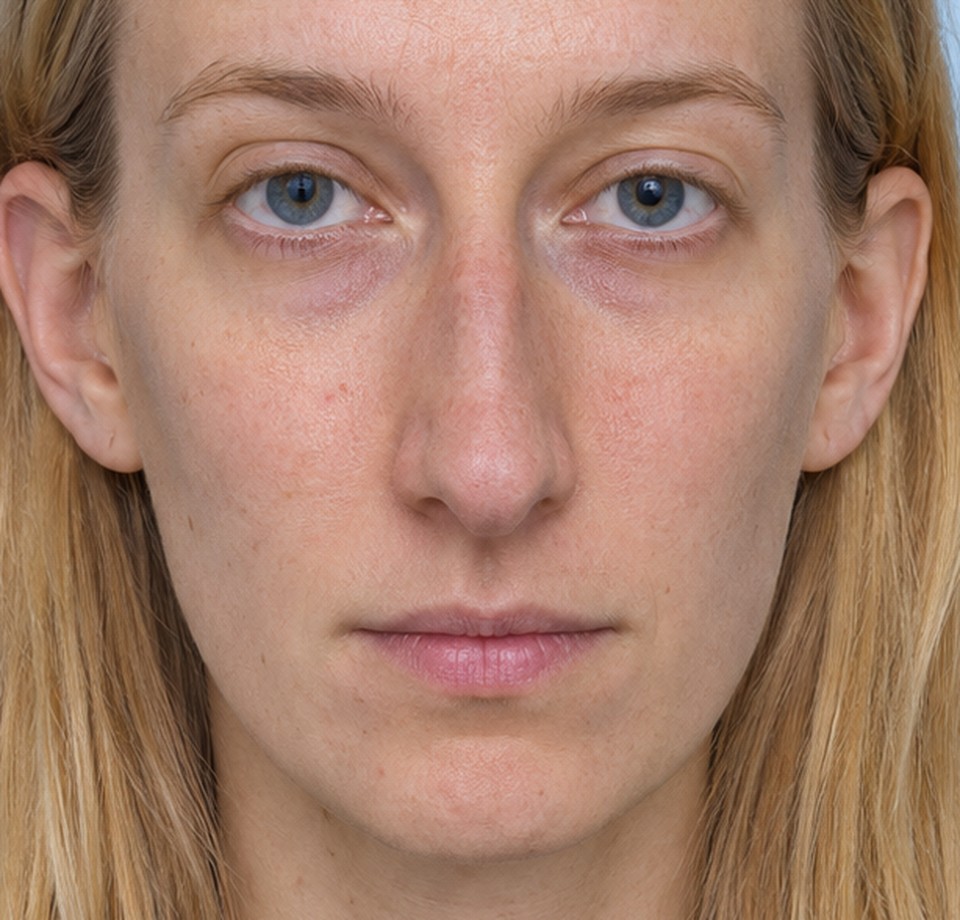
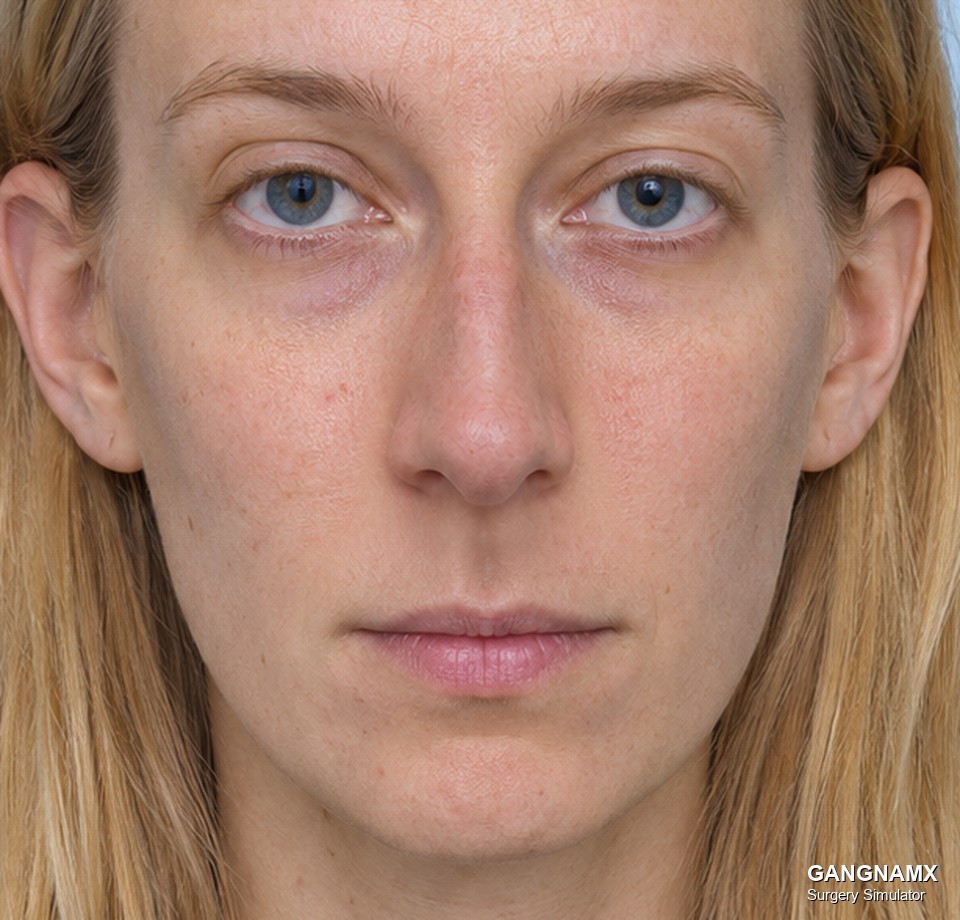
Our model is a good example. She has a long oval face, a long thin nose with a softly drooping tip, and deep set blue eyes. Those features are strong and distinct. They would not become a Korean face by any procedure, and that is not the point. The question is only whether a small change to one feature would make her own face feel more balanced to her.
2. Soft light and skin: the layer anyone can borrow
A great deal of what people call a Korean look is photography and skin care.
Korean beauty photography leans on soft, even, front light. It lowers shadows under the eyes, under the nose and along the jaw. Shadows are what make features look sharp and heavy. Remove the shadows and the whole face looks calmer and smoother.
Skin is the second half. A dewy, even finish reflects light in a way that reads as health. Layered, gentle skin care, sun protection and a light touch with base makeup are popular habits in Korean routines, and they are available to everyone.
You can borrow all of this without touching your face:
- Light: face a window or a large soft lamp, not an overhead bulb.
- Skin: protect it from the sun every day and keep the routine simple and steady.
- Colour: keep colour soft and close to your own tone.
This layer does the most work and costs the least. It also makes any later comparison more honest, because you are looking at your own face in fair light.
3. Styling: the layer that changes proportions
Styling is how hair, brows and makeup redraw a face.
Hair framing around the cheeks makes a round face look narrower and a long face look shorter. Straighter, softer brows change how long the face reads. Make-up can place shade and light to shift the nose or the jaw in photos.
Soft eye makeup is another habit people borrow. A subtle line, a gentle shimmer and a natural lash can make the eye look more open without changing the lid.
These are reversible and free of risk. Try them first. They teach you what kind of change actually suits your proportions, and they give a surgeon a cleaner idea of what you like.
4. What to borrow, in order
Put the three layers in this order:
- Light and skin. Change the light in your photos and your daily routine.
- Styling. Change the hair, brows and makeup.
- Structure. Only then ask whether a small structural change is worth a conversation with a surgeon.
Most people find that the first two layers answer much of the question.
If you are still curious about structure, look at one feature at a time. Do not try a whole face. In our simulation, we show two small changes on the same face, separately, so you can see which one you would care about.
Here is the first. The nose comes out clearly narrower and more refined, with a softer, lifted tip. The change is easy to see side by side, yet she still looks like herself.
The second change is at the eye. A low, natural crease is added to the upper lid and the lids sit a little more open, and the change reads clearly next to the original. The eye shape, the iris and the colour are the same.
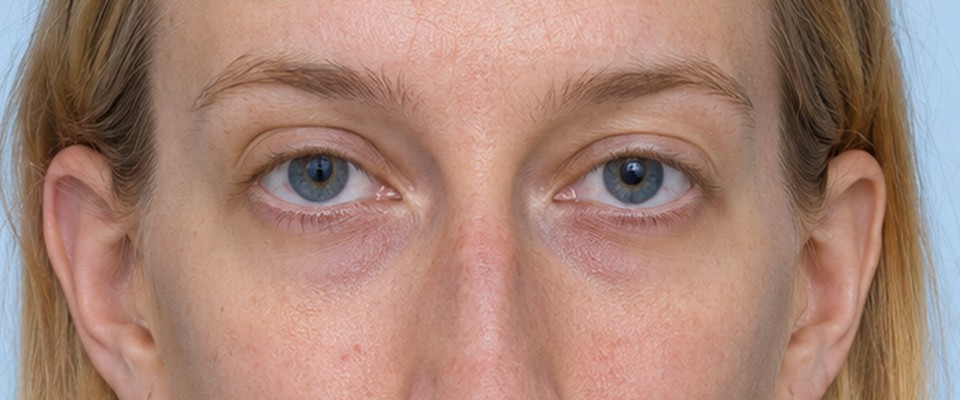
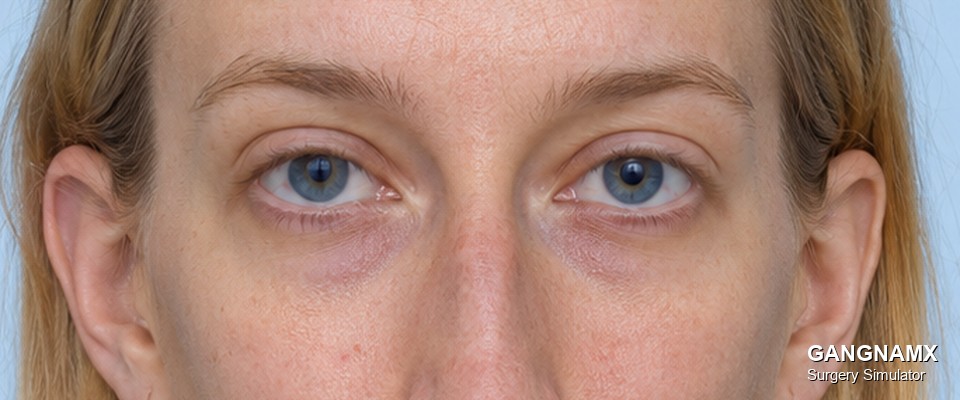
Look at what stayed the same. She still has her long oval face, her blue eyes and her own proportions. That is the standard to hold any change to: it should still look like you.
5. If surgery is on the list
Seoul clinics see a great number of consultations, and many are used to working with international clients. That is useful, but it does not decide your plan.
A good consultation starts with your goals and your face, not with a Korean template. Ask the surgeon to explain what they would change, what they would leave, and why. Ask to see results on faces with a similar structure to yours.
Be wary of a plan that makes your face look like a standard type. The aim is a balanced version of your own face. The surgeon who examines you is the right person to say what is possible. Many questions about safety, healing and options can only be answered in person.
Bring your own references. A few images of faces whose balance you like, plus a clear note about which feature you like in each, is far more useful than “make me look Korean”.
Before you decide
- Do: fix the light and skin first, then styling, then ask about structure.
- Do: look at one feature at a time, on your own face.
- Do: bring references with a written note about the one feature you like.
- Don’t: treat “Korean look” as one face or one procedure.
- Don’t: copy a bone structure that is not yours.
- Ask: which change would keep my own features and still suit my proportions?
Simulation images by GangnamX.
 Plastic Surgery SimulatorKnow before you go.Simulate my face